Brits Are Finding Smarter Ways to Protect Cash at Home
Understanding independent security ratings
Most people do not think seriously about protecting their valuables until something goes wrong. A break-in,
a house fire, or the sudden realisation that important documents are missing is often the turning point. The
reality is that not all safes provide meaningful protection — many create a false sense of security.
Terms such as “heavy-duty” or “tamper-resistant” are frequently used in
product descriptions but offer little technical value. What truly matters are independently verified
security ratings, based on controlled testing where safes face real break-in attempts with specific tools
over defined time periods.
Entry Level
RSC Rated
Withstands basic hand tool attacks for up to 5 minutes. Suitable for deterring
opportunistic theft.
Mid Range
B-Rate
Thicker steel, reinforced doors. Resists more determined attacks for up to 30 minutes.
Professional
C-Rate & Above
Withstands professional-grade tools and prolonged attacks. Typically for higher-risk
environments.
“For most residential settings, RSC or B-Rate safes provide a practical balance between cost
and protection.”
Which Home Safe Is Right For You?
Your storage goals should determine every feature choice
📄
Documents: Fire protection matters more than thick steel.
💎
Jewelry and valuables: Security rating matters more than fire
resistance.
⚖
Mixed storage: Balanced fire and theft protection works best.
For most households, spending £250–£500 delivers reliable protection. Prioritize
60-minute fire ratings and RSC or B-Rate certification instead of flashy features.
Multiple smaller safes usually outperform one large unit. Documents go in a fire safe, valuables in a
security safe. Splitting storage reduces risk, allows better placement, and prevents a single failure point.
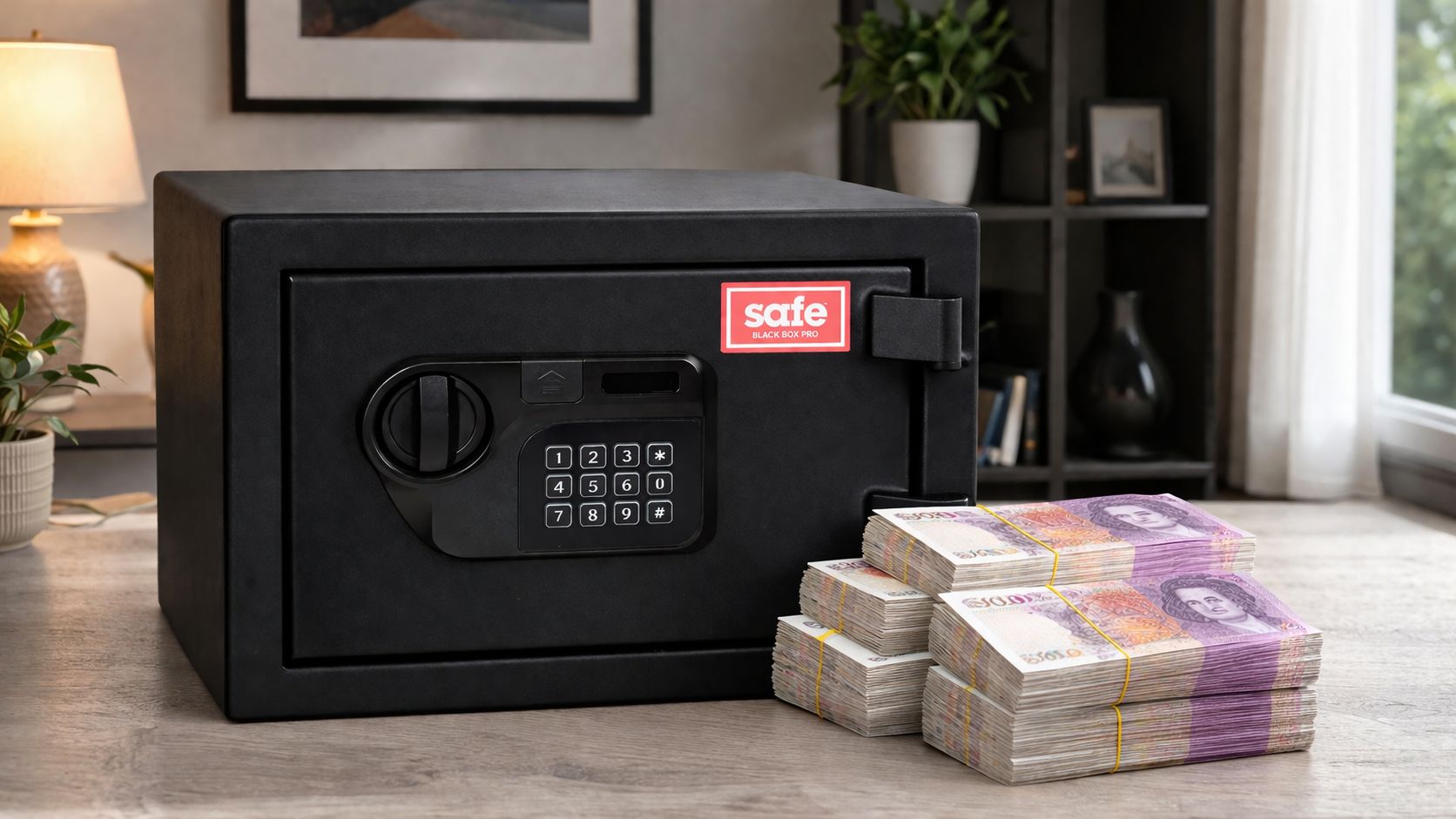
A smart approach is to buy a basic fire safe first, then add a security safe later once you understand how
you actually use it. This saves money upfront and leads to better long-term decisions.
Understanding Fire Ratings
How long your documents actually survive
During certification testing, safes are exposed to temperatures reaching approximately 1,700°F. To pass,
the internal temperature must remain below 350°F — the threshold at which paper begins to degrade. Not all
fire ratings offer the same level of protection.
| Fire Rating |
Test Duration |
Internal Temp Limit |
Best Use Case |
| 30 min |
30 min at 1,700°F |
≤ 350°F |
Basic documents, quick fire response |
| 60 min |
60 min at 1,700°F |
≤ 350°F |
Typical residential fires Recommended |
| 90+ min |
90+ min at 1,700°F |
≤ 350°F |
High-risk or delayed fire response |
A sixty-minute fire rating typically offers
the most balanced combination of cost and effectiveness for most households.
Common Mistakes That Reduce Protection
Even a well-built safe can fail if used incorrectly
!
Placing safes in predictable locations such as master bedrooms or home offices
!
Choosing a safe that is too large, leading to poor organisation and wasted space
!
Failing to manage humidity, especially in basements or garages
!
Not sharing access information with trusted family members for emergencies
!
Neglecting regular maintenance and lock mechanism testing
!
Assuming fire protection covers all materials — digital media may still be damaged
Budget Considerations
Typical price ranges by security grade
Safe pricing varies significantly depending on construction quality, fire resistance, and locking
mechanisms. A higher price does not always guarantee better suitability for your specific needs.
| Safe Category |
Typical Price Range |
| Basic fire safes |
£40 – £120 |
| RSC-rated safes |
£160 – £320 |
| B-Rate safes |
£650 – £1,600 |
| C-Rate & higher |
£1,600+ |